







Simple Compliance Guide for Indian Contractor Projects
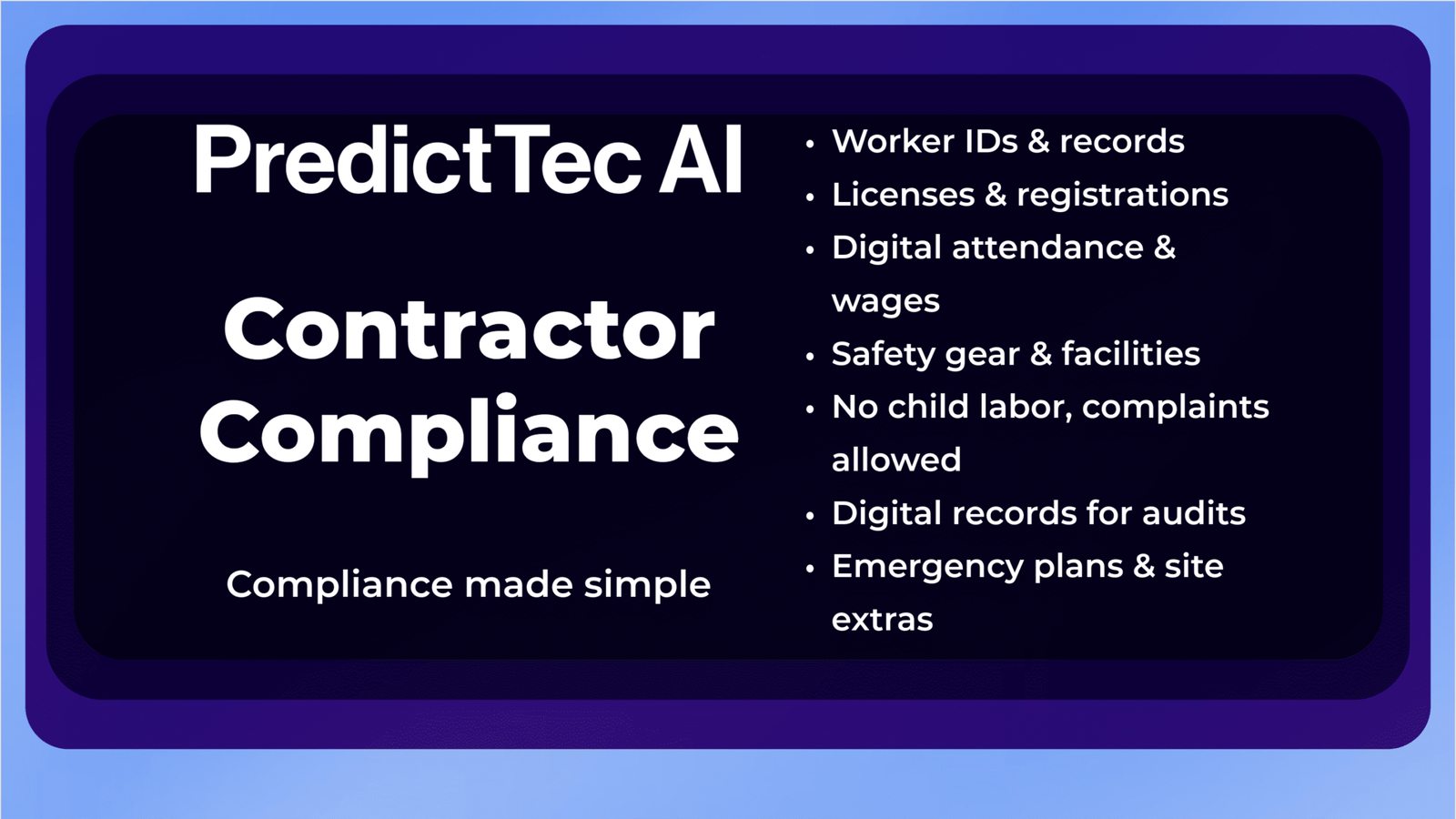
Contractor Compliance Simplified: Key Steps for Indian Projects
Staying compliant with Indian labor laws is essential for any business that hires contractors—be it in construction, manufacturing, or other sectors. Compliance not only prevents legal trouble but also keeps projects running smoothly. Here’s a simple checklist that makes managing contractor compliance easier for everyone involved.
Worker Records & Identity Checks
Keep a list of all contract workers. Make sure it includes their name, photo, basic ID, and job details. Always use government-issued IDs like Aadhaar or a voter ID. If needed, check their police and medical records—especially for risky jobs.
Contractor Registration & Licenses
Before work starts, ensure contractors are registered under key Indian laws. They need valid labor licenses, may have to register under the Building and Other Construction Workers (BOCW) Act, and should share all relevant registration numbers. Place important labor law notices and certificates at work sites.
Tracking Attendance & Payment
Switch to digital, tamper-proof attendance methods—like biometric or facial recognition. Pay all workers on time and as per law, always giving them proper wage slips. Record and deposit all mandatory benefits like EPF and ESI. Document everything, from attendance to wage registers.
Safety & Worker Welfare
Provide safety gear (like helmets and gloves) and ensure the site has clean drinking water, medical help, and toilets. Post safety instructions clearly, run safety workshops, and record any accidents immediately.
Upholding Worker Rights
Never allow child or forced labor. Give workers a clear way to raise complaints—like a help desk or complaint box. Treat everyone fairly, without discrimination or harassment.
Proper Documentation & Audits
Store all records—attendance, payments, inspections—digitally for easy access during audits or surprise inspections. Keep documents up to date and ready for officials.
Site-Specific Extras
For dangerous or large sites, assess risks often and have emergency plans in place. Large projects may need extra facilities like canteens or creches for women staff. Regularly review contractor performance on safety, punctuality, and legal compliance.
Practical Next Steps
- Use digital systems to automate compliance tasks.
- Train supervisors about changing regulations.
- Audit sites regularly using the checklist.
- Rate contractors on compliance and keep scorecards.
- Consult with legal experts about new rules.
By following this checklist, businesses can make sure their sites are safe, legal, and well-managed—building trust with workers, clients, and government.